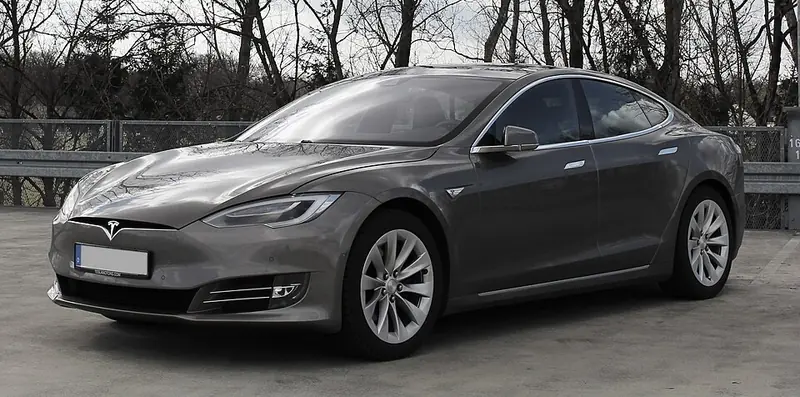
The figures on this page assume a dedicated 32 A circuit. Choose your grid type and main fuse, and we'll work out what Tesla Model S 75D (2016–2019) actually gives in your home.
Best chargers for Tesla Model S 75D (2016–2019)
Ranked by actual charging speed first, then price.
Can the Tesla Model S 75D charge on 3-phase on an IT grid?
Yes. The Tesla Model S 75D is one of the few EVs that support 3-phase on a 230V IT grid, at up to 11 kW. The charger must support IT 3-phase too, for example Easee Charge Up, Tesla Wall Connector Gen 3 and DEFA Power. With a charger that only gives 1 phase on an IT grid, the maximum is 7.4 kW.
How long does the Tesla Model S 75D take to charge at home?
With 72.5 kWh of usable battery capacity, it takes about 4 h 29 min from 10 to 100% on a TN grid (16 kW) and about 6 h 32 min on an IT grid (11 kW), with a charger that gives full speed. From an ordinary household socket (about 2.3 kW) it takes about 31 h 12 min.
Which home charger is best for the Tesla Model S 75D?
Easee Charge Up is the cheapest charger that gives full speed on both IT grids (11 kW) and TN grids (16 kW), from NOK 6,499. In total, 8 chargers with a known price give the same speed.
How fast does the Tesla Model S 75D charge on a 16 A circuit?
The figures above assume a 32 A circuit. With 16 A, the maximum is 3.7 kW on 1 phase, 11 kW on 3 phases on a TN grid and 6.4 kW on 3 phases on an IT grid. The main fuse and other loads in the house can also limit charging – ask your electrician what your home can handle.