Skip to content
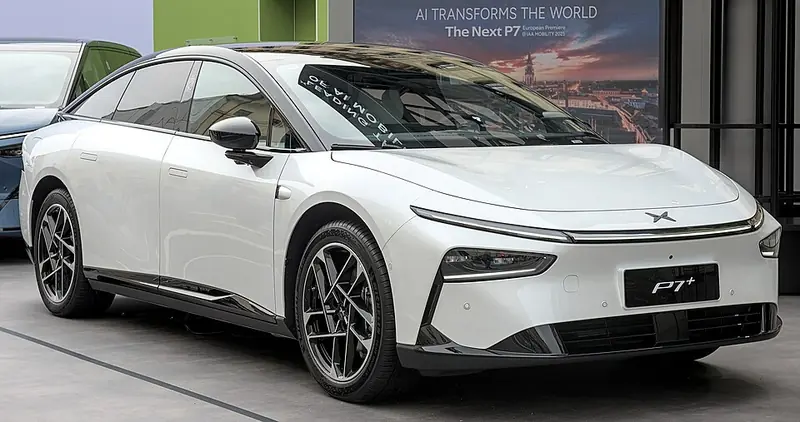
XPENG P7+ RWD Standard Range
Photo: Alexander-93, CC BY-SA 4.0 · Wikimedia Commons

XPENG

P7+ RWD Standard Range

Model years from 2026

TN grid · 400V

11kWwith the right charger

10–100% in about 5 h 22 min

IT grid · 230V

7.4kWwith the right charger

10–100% in about 7 h 58 min

Usable battery capacity
59.6 kWh
Phases when AC charging
3-phase
Max AC charging (TN 400V)
11 kW
Max on 1 phase
7.4 kW
3-phase on IT grid (230V)
No, 1-phase only

In your home

How fast will it charge in your home?

The figures on this page assume a dedicated 32 A circuit. Choose your grid type and main fuse, and we'll work out what XPENG P7+ RWD Standard Range (from 2026) actually gives in your home.

Grid type
Supply

Where do I find this?
  • Grid type: If your fuse box says 230V between phases, you have an IT grid. 400V means a TN grid. Your grid company can also tell you.
  • Supply: Almost every home has a 3-phase supply. 1-phase is mostly found in cabins and some flats. If unsure, choose 3-phase.
  • Main fuse: It's on the main switch in the fuse box, often 40, 50 or 63 A. It's expensive to upgrade, so we use the one you have.
  • Charging circuit: If you already have a dedicated circuit for a charger, choose its fuse. Otherwise we estimate what the charger can use from the main fuse.
How we calculate with your fuses

Best chargers for XPENG P7+ RWD Standard Range (from 2026)

Ranked by actual charging speed first, then price.

IT grid · 230V · Common in older homes

  1. 1
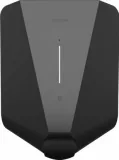
    Easee Charge Up
    Easee Charge Upfrom NOK 6,499

    7.4kW1-phase

    10–100% in about 7 h 58 min

    See charging speed
  2. 2
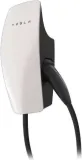
    Tesla Wall Connector Gen 3
    Tesla Wall Connector Gen 3from NOK 7,628

    7.4kW1-phase

    10–100% in about 7 h 58 min

    See charging speed
  3. 3
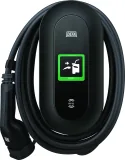
    DEFA Power
    DEFA Powerfrom NOK 8,591

    7.4kW1-phase

    10–100% in about 7 h 58 min

    See charging speed

All home chargers for P7+ RWD Standard Range

Actual charging power with each charger, sorted by speed on an IT grid. Tap a charger for details and the bottleneck.

ChargerIT 230VTN 400V
Easee Charge Up7.4 kW1ph11 kW3ph
Tesla Wall Connector Gen 37.4 kW1ph11 kW3ph
DEFA Power7.4 kW1ph11 kW3ph
Zaptec Go 27.4 kW1ph11 kW3ph
Easee Charge Core7.4 kW1ph11 kW3ph
Easee Charge Max7.4 kW1ph11 kW3ph
Zaptec Pro7.4 kW1ph11 kW3ph
Garo Entity Pro7.4 kW1ph11 kW3ph
Charge Amps Aura7.4 kW1ph11 kW3ph
Wallbox Pulsar Max7.4 kW1ph11 kW3ph
Zaptec Go7.4 kW1ph11 kW3ph
Charge Amps Halo3.7 kW1ph11 kW3ph
DEFA Power SNot compatible11 kW3ph
Easee OneNot compatible7.4 kW1ph

Questions about charging the XPENG P7+ RWD Standard Range

Can the XPENG P7+ RWD Standard Range charge on 3-phase on an IT grid?

No. The XPENG P7+ RWD Standard Range only charges on 1 phase on a 230V IT grid, whichever charger you have. The maximum there is 7.4 kW. On a TN grid (400V) it charges on 3 phases at up to 11 kW.

How long does the XPENG P7+ RWD Standard Range take to charge at home?

With 59.6 kWh of usable battery capacity, it takes about 5 h 22 min from 10 to 100% on a TN grid (11 kW) and about 7 h 58 min on an IT grid (7.4 kW), with a charger that gives full speed. From an ordinary household socket (about 2.3 kW) it takes about 25 h 39 min.

Which home charger is best for the XPENG P7+ RWD Standard Range?

Easee Charge Up is the cheapest charger that gives full speed on both IT grids (7.4 kW) and TN grids (11 kW), from NOK 6,499. In total, 8 chargers with a known price give the same speed. Since the XPENG P7+ RWD Standard Range charges on 1 phase on an IT grid anyway, there's no need to pay extra for a charger with IT 3-phase support.

How fast does the XPENG P7+ RWD Standard Range charge on a 16 A circuit?

The figures above assume a 32 A circuit. With 16 A, the maximum is 3.7 kW on 1 phase and 11 kW on 3 phases on a TN grid. The main fuse and other loads in the house can also limit charging – ask your electrician what your home can handle.
Read more about charging on an IT grid and how we calculate the charging speed.